PRODUCT ENVIRONMENTAL SUSTAINABILITY
MINIMISING MATERIALS CONSUMPTION
- Dematerialise the product or some of its components -Monospace Eco-Disc Elevator.
- Digitalise the product or some of its components – Ebook Reader.
- Miniaturise
- Avoid over-sized dimensions -Unspon.
- Reduce thickness
- Apply ribbed structures to increase structural stiffness-Ripple table – Layer Design;Setu Chair.
- Avoid extra components with little functionality -Wright Guitar Tecnology.
- Select processes that reduce scraps and discarded materials during production -Compwood Machine; -EOS and Air Bus -Son of a Tailor
- Engage simulation systems to optimise transformation processes
- Avoid packaging – Lancome; -Lush
- Apply materials only where absolutely necessary – Minimize with Bicycle;-Televison set
- Design the package to be part (or to become a part) of the product -Ice Cream;-Studio Boca;
- Design for more efficient consumption of operational materials Leafy green machine – Freight-farm; -The ecloth System;-Ceramica dolomite;
- Design for more efficient supply of raw materials -Novape
- Design for more efficient use of maintenance materials
- Design systems for consumption of passive materials -Algreen
- Design for cascading recycling systems
- Designing Materials Recovery Systems -Roca
- Facilitate the user to reduce material consumption –Grohe
- Set the product’s default state at minimal materials consumption
- Engage digital support systems with dynamic configuration
- Design variable material consumption systems for different operating requirements -Cesame
- Use of sensors to adjust material consumption to operational requirements -Washing Machine Bosch
- Reduce resource consumption in the product’s default state
- Minimise the consumption of stationery goods and their packages
- Engage digital tools in designing, modelling and prototyping
- Engage digital tools for documentation, communication and presentation
MINIMISING ENERGY CONSUMPTION
- Select materials with low energy intensity
- Select processing technologies with the lowest energy consumption possible
- Engage efficient machinery
- Use heat emitted in certain processes for preheating other process flows
- Engage pump and motor speed regulators with dynamic configuration
- Equip the machinery with intelligent power-off utilities
- Optimise the overall dimensions of the engines
- Facilitate engine maintenance
- Define accurately the tolerance parameters
- Optimise the volumes of required real estate
- Optimise stocktaking systems
- Optimise transportation systems and scale down the weight and dimensions of all transportable materials and semi-products
- Engage efficient general heating, illumination and ventilation in buildings
- Design compact high-density storage products -Fly Seld
- Design concentrated products -Earthsuds
- Equip products with onsite assembly ‘UP’ vacuum packed seat collection – B&B Italia; Flat packed and easy assembled stool – King & Webbon; Olga montable chair – Ikea,
- Scale down the product weight
- Scale down the packaging weight -Air Cushion
- Decentralise activities to reduce transportation volumes -Electronic Meter Enel;
- Select local material and energy sources Hack table system – Vitra;-Solar Cookers
- Design products for collective use -Disan
- Design for the efficient use of resources needed for operation -Cold water Maschine Samsung -Aufla
- Design for energy-efficient maintenance -Ably
- Design systems for consumption of passive energy sources -The passive house
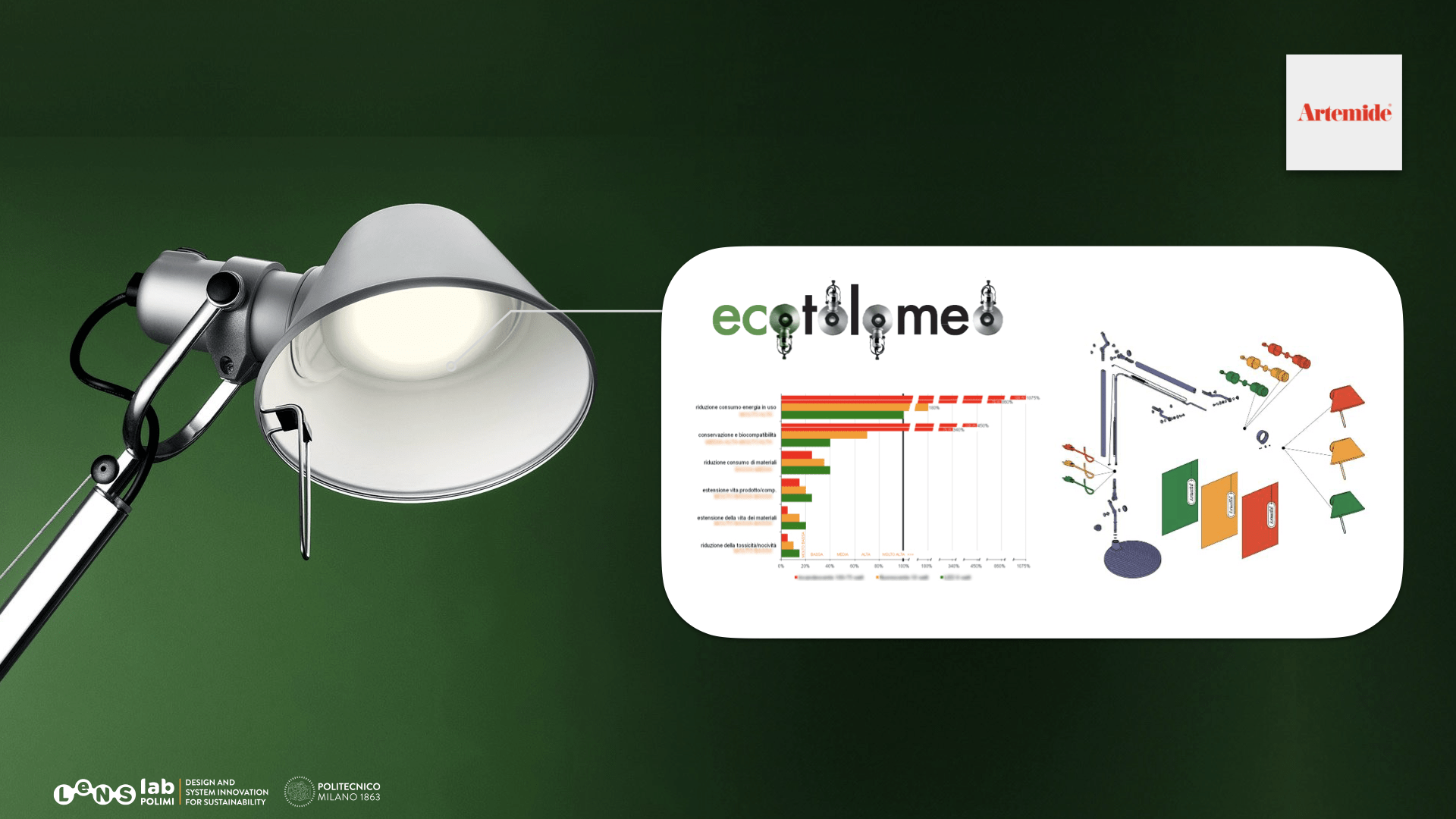
Adopt high-efficiency energy transformation systems -Luceplan
- Design/adopt more efficient motors -Volkswagen;-Milano ATM
- Design/adopt highly efficient energy transmission systems -Oxford PV -ScotchLit 3m
- Use highly insulating materials or technical components
- Design systems with localised insulation or energy delivery -Aeroshield
- Scale down the weight of transportable goods
- Design energy recovery systems -Dancing Floor -TGO
- Facilitate users in reducing energy consumption
product default state at minimal energy consumptions
- Design dynamic energy consumption systems for differentiated operational stages
- Use sensors to adapt consumption to operational needs -Zumtobel
- Incorporate auto switch-off mechanisms into products -TVlights group
- Program product default state at minimal energy consumption -Microsoft Windows 11
- Engage efficient workplace heating, illumination and ventilation
- Engage digital tools for communicating with remote working sites
MINIMISING RESOURCES TOXICITY AND HARMFULNESS
- Avoid toxic or harmful materials for product components -Woodly
- Minimise the hazard of toxic and harmful materials
- Avoid materials that emit toxic or harmful substances during pre-production -Foxfiber Cotton
- Avoid additives that emit toxic or harmful substances -Ecobalanza
- Avoid technologies that process toxic and harmful materials
- Avoid toxic or harmful surface treatments Plant-based fibres clothes – Flavia Aranha
- Design products that do not consume toxic and harmful materials
- Avoid materials that emit toxic or harmful substances during usage
- Avoid materials that emit toxic or harmful substances during disposal
- Select energy resources that reduce dangerous emissions during pre-production and production -Thorens AG;-Ljusa crunk Ikea; -Seiko
- Select energy resources that reduce dangerous emissions during distribution
- Select energy resources that reduce dangerous emissions during usage -CRV Honda;-Sunride Politecnico;-Hydra Light
- Select energy resources that reduce dangerous residues and toxic and harmful wast
OPTIMISING RESOURCES RENEWABILITY AND BIO-COMPATIBILITY
- Use renewable materials -Bamboo Bicycle ; -Peacock Designs;-Palm Fibers Sandals; -Pumpkin Soap Be9;-The body shop; -Rothys;
- Avoid exhaustible materials
- Use materials derived from production waste -Tulip Box;-Orange Fiber
- Use retrieved components from disposed products -Ecolo Projects; -Alan Tompson; -Freitag bags;-Replastic Table
- Use recycled materials, alone or combined with primary materials –Navy Chair – Emeco; -Abet Laminati; -Aquafil;-EcoaLf
- Use bio-degradable materials
- Use renewable energy resources -Ceam Group; -Voltaic Systems
- Engage the cascade approach -Saitex
- Select energy resources with high second-order efficiency
PRODUCT LIFESPAN OPTIMISATION
- Design durable components, choosing materials and the appropriate ways to preserve performances in relationship with the foreseen usage conditions -D’Light
- Design components with co-extensive lifespan -Kycoera
- Design lifespan of replaceable components according to scheduled duration
- Enable and facilitate the separation of components with different lifespans -Canon
- Select durable materials according to the product performance and lifespan -Nobili
- Avoid selecting durable materials for temporary products or components -Novamont
- Reduce overall number of components
- Simplify products
- Eliminate weak connections
- Enable and facilitate software upgrade
- Enable and facilitate hardware upgrade –Modular and easy to repair smartphone – Fairphone
- Design modular and dynamically configured products to facilitate their adaptability for changing environments -The movable dividing office walls – Sorin; -Wilkhahn OfficeChair; –Let it be modular sofa – Poltrona Frau
- Design multifunctional and dynamically configured products to facilitate their adaptability for changing cultural and physical individual backgrounds –Busunge extendable bed – Ikea; –Lemuria;-Petit Pli;-Stokke AS
- Design products that can be upgraded and adapted onsite -Eket Moduar Ikea
- Design complementary tools and documentation for product upgrade and adaptation
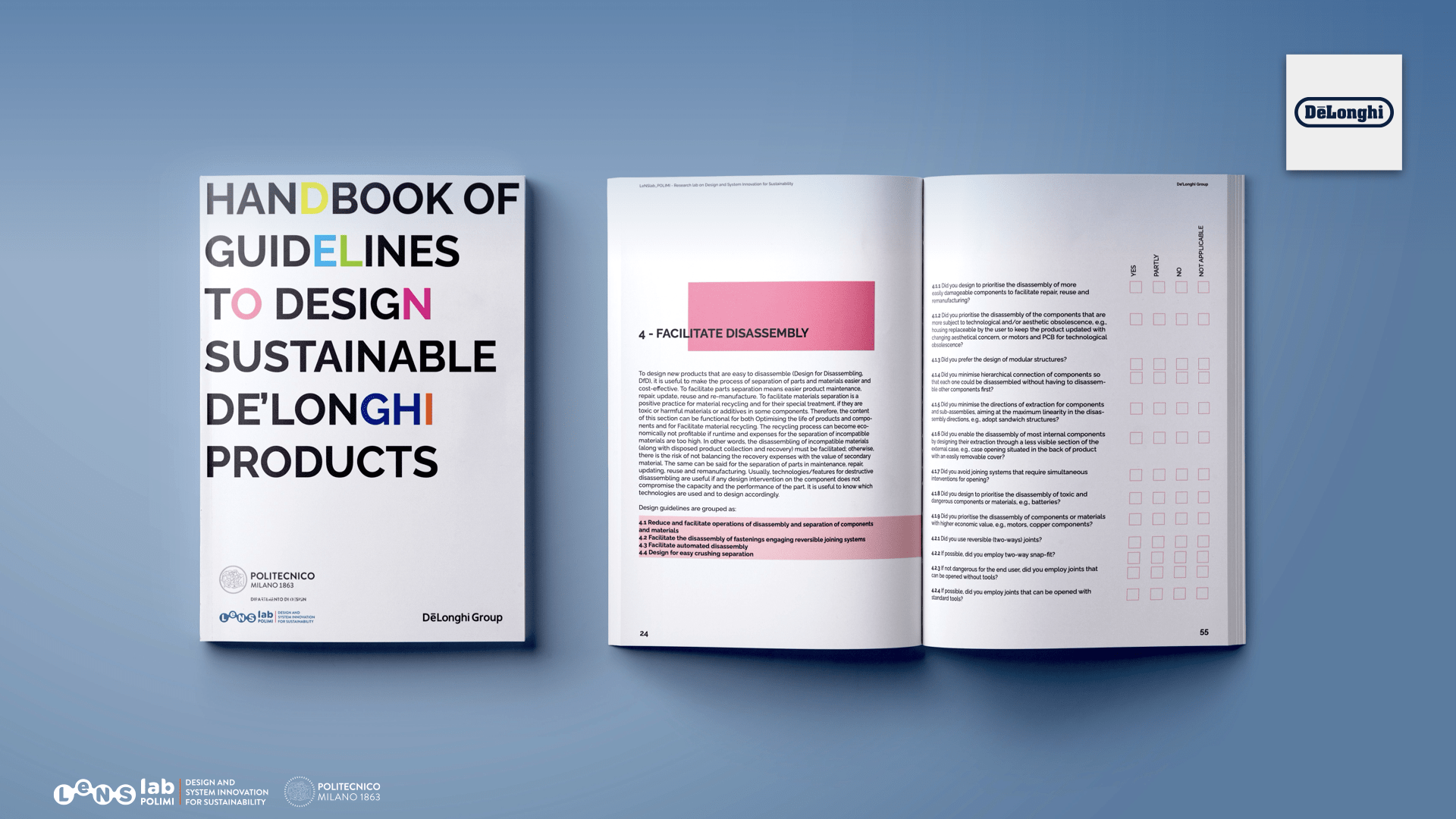
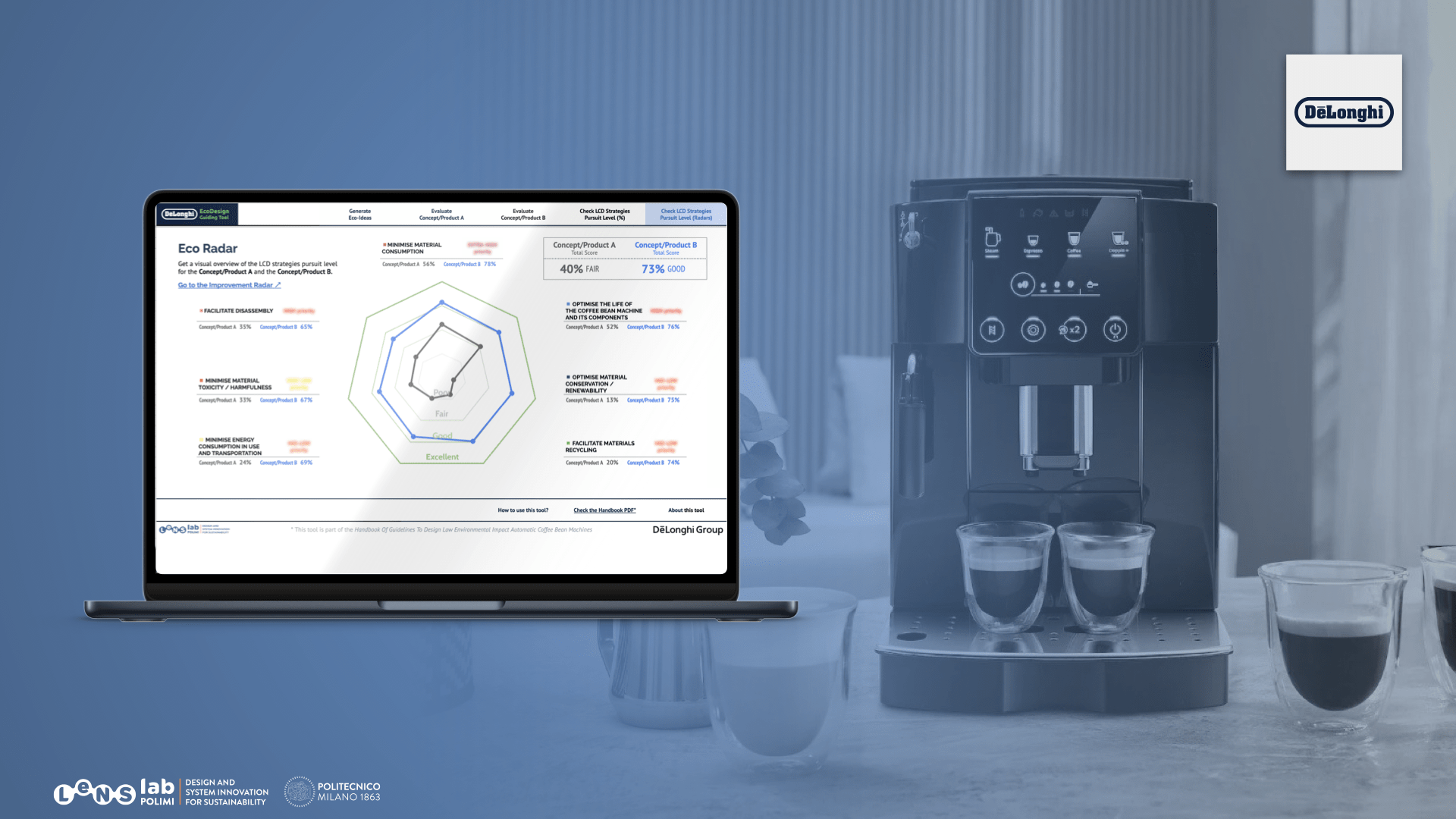
- Simplify access and disassembly to components to be maintained -DeLonghi
- Avoid narrow slits and holes to facilitate access for cleaning
- Pre-arrange and facilitate the substitution of short-lived components Silver care toothbrush with replaceable brushes – Spazzolifico Piave; ‘Re-soleable’ mountain boots – La Sportiva
- Equip the product with easily usable tools for maintenance
- Equip products with diagnostic and/or self-diagnostic systems for components requiring maintenance -ElectroLux
- Arrange and design for easy maintenance, making it possible at the place of use to clean and/or replace certain parts -Charile Banana
- Design complementary maintenance tools and documentation -Piano bookshelves equipped with maintenance kit – Riva
- Design products that need less maintenance
- Arrange and facilitate disassembly and re-assembly of easily damageable components Mirra chair – Herman Miller
- Design components according to standards
- Equip products with automatic damage diagnostics system Photocopiers with automatic systems for monitoring – Xerox; Damage signal lights and component map – Dell
- Design products for facilitated onsite repair
- Design complementary repair tools, materials and documentation
- Increase the resistance of components most subject to wear or damage
- Arrange and facilitate access and removal of reusable components -Gispen
- Design interchangeable and modular parts and components Natura office chair – Grammer;
- Design components according to standards to facilitate replacement
- Design reusable auxiliary parts
- Design refillable and/or reusable packaging –Refillable glue stick – Henkel; –Returnable-Reusable refrigerator shipping packages – Samsung
- Design products for secondary use –Nutella glass bottle – Ferrero; -Reuse of glassbottle
- Design and facilitate the removal and replacement of easily worn components
- Design structural parts that can be easily separated from visible parts
- Facilitate access to components to be remanufactured
- Provide adequate tolerances for points most subject to wear
- Design with additional material for refinishing certain surfaces
- Design product-services for a shared use Power bank sharing system – Anker;
- Design multifunctional products with common substitutable components
- Design products with integrated functions Skypass access – Swatch
- Design products or product parts on demand
- Design products or product parts based on availability -Car Sharing Service
EXTENDING THE LIFESPAN OF MATERIALS
- Arrange and facilitate recycling of materials in components with lower mechanical requirements
- Arrange and facilitate recycling of materials in components with lower aesthetical requirements
- Arrange and facilitate energy recovery from materials throughout combustion
- Select materials that easily recover their original performance characteristics after recycling
- Avoid composite materials or, when necessary, choose easily recyclable ones
- Engage geometrical solutions like ribbing to increase polymer stiffness instead of reinforcing fibres
- Prefer thermoplastic polymers to thermosetting
- Prefer heat-proof thermoplastic polymers to fireproof additives
- Design considering the secondary use of the materials once recycled
- Design according to the intended end-of-life product recovery system
- Minimise overall weight
- Minimise volume and improve the stackability of disposed products
- Design for the compressibility of disposed products Re(new) compressive water bottle after use – Evian; Can compactor – Attila;
- Provide users with information on how to dispose of the product or its parts Water bottle labels – Evian
- Code the different materials to identify their type
- Provide additional information on material age, the number of previous recycling cycles, and the additives used
- Indicate the presence of contaminants or toxic and harmful materials
- Use standard identification systems
- Place identification codes in clearly visible locations
- Avoid coding operations after component production
- Integrate functions to reduce the overall number of materials and components
- Monomaterial strategy: only one material per product or per sub-assembly CAB Chair System – Cassina; Mirandolina aluminum chair – Zanotta; Celle office armchair – Herman Miller; -Monomaterial packaging
- Use only one material, but processed in sandwich structures -GreenForest
- Use compatible materials (that could be recycled together) within the product or sub-assembly
- For joining use the same or compatible materials as in components (to be joined)
- Avoid unnecessary surface finishes
- Avoid hard-to-remove coating materials
- Facilitate removal of contaminants
- Use coating procedures that comply with coated materials
- Avoid adhesives or choose ones that comply with materials to be recycled
- Prefer the dyeing of internal polymers, rather than surface painting T2 Eco telemark boot – Scarpa
- Avoid using additional materials for marking or codification
- Mark and codify materials during moulding
- Codify polymers using lasers
- Select materials that degrade in the expected end-of-life environment
- Avoid combining non-biodegradable materials with products that are going to be composted
- Facilitate the separation of non-biodegradable materials
- Select high energy materials for products that are going to be incinerated
- Avoid materials that release dangerous substances during incineration
- Avoid additives that release dangerous substances during incineration
- Facilitate the separation of materials that would compromise the efficiency of combustion (with low energy value)
FACILITATING DISASSEMBLY
- Prioritise the disassembly of toxic and dangerous components or materials
- Prioritise the disassembly of components or materials with higher economic value
- Prioritise the disassembly of more easily damageable components
- Prioritise the disassembly of the parts that are more subject to technological/aesthetic obsolescence
- Adopt modular structures
- Divide the product into easily separable and manipulable sub-assemblies -Interface Inc
- Minimise overall dimensions of the product
- Minimise hierarchically dependent connections between components
- Minimise different directions in the disassembly route of components and materials
- Increase the linearity of the disassembly route
- Adopt a sandwich system of disassembly with central joining elements
- Avoid difficult-to-handle components
- Avoid asymmetrical components, unless required
- Design leaning surfaces and grabbing features in compliance with standards
- Arrange leaning surfaces around the product’s centre of gravity
- Design for easy centring on the component base.
- Avoid joining systems that require simultaneous interventions for opening
- Minimise the overall number of fasteners ‘DRY’ collection of armchair and easy demountable tables – Giorgetti Matrix
- Minimise the overall number of different fastener types (that demand different tools)
- Avoid difficult-to-handle fasteners
- Design accessible and recognisable entrances for dismantling
- Design accessible and controllable dismantling points.
- Use two-way snap-fits -Ara Chair; -Lisabo table
- Use joints that are opened without tools -Alessi
- Use joints that are opened with common tools
- Design joints made of materials that become reversible only in determined conditions -Fastening screws made of polyurethane Brunel university
- Use screws with low-wear drive heads, such as Torx or external hex-head screws
- Prefer removable nuts and clips to self-tapping screws
- Use screws made of materials compatible with joint components, to avoid their separation before recycling
- Use self-tapping screws for polymers to avoid using metallic inserts
- Avoid rivets on incompatible materials
- Avoid staples on incompatible materials
- Avoid additional materials while welding
- Weld with compatible materials
- Prefer ultrasonic and vibration welding with polymers
- Avoid glueing with adhesives
- Employ easily removable adhesives.
- Prepare frangible areas with thin sections for removal by pressure or lever of incompatible inserts
- Co-design cutting or breaking paths with appropriate separation technologies for incompatible materials separation
- Equip the product with a device to separate incompatible materials
- Use joining elements that allow their chemical or physical destruction
- Make the breaking points easily accessible and recognisable
- Provide the products with information for the user about the characteristics of crushing separation.